Ace Mighty Clash: India's Premier Action RPG Game 🇮🇳
📌 Game Overview: Ace Mighty Clash
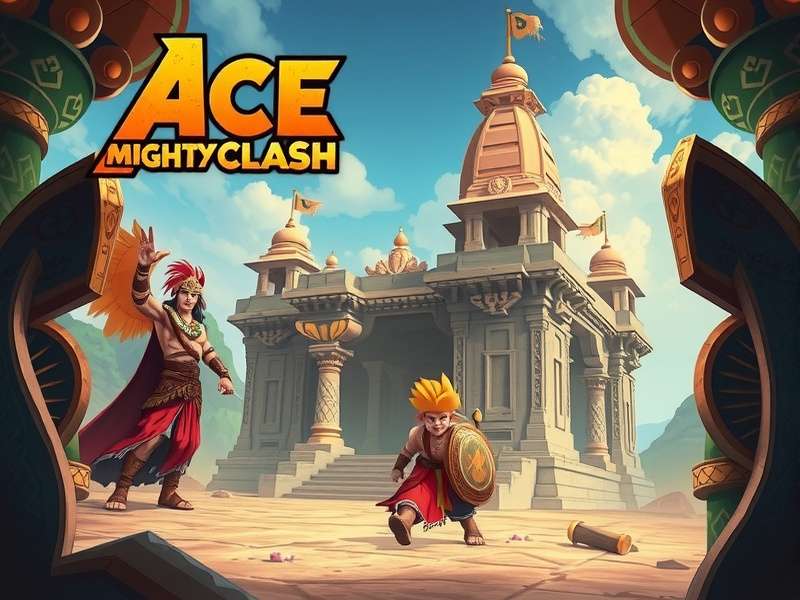
Ace Mighty Clash has emerged as India's most ambitious and culturally resonant action RPG mobile game, developed by Indian Game Studios Pvt. Ltd. and published through Daman Games in August 2024. Unlike generic fantasy RPGs that replicate Western mythologies and combat systems, Ace Mighty Clash was conceptualized, designed, and developed specifically for the Indian gaming audience, drawing inspiration from India's rich mythological heritage, diverse cultural traditions, and breathtaking geographical landscapes. This homegrown Indian game has redefined what mobile gaming can achieve in India by blending world-class RPG mechanics with deeply rooted Indian storytelling, mythological narratives, and regional cultural values that strike a chord with Indian gamers across urban metros, tier-2 cities, and rural hinterlands alike.
Set across a stunningly rendered India that seamlessly blends ancient mythological realms with modern urban landscapes, Ace Mighty Clash places players in the role of "Legendary Guardians" – warriors blessed with divine powers from India's epic mythologies (Mahabharata, Ramayana, Puranas) who must protect the nation from dark forces threatening to destroy the balance between the mortal and divine worlds. What truly distinguishes Ace Mighty Clash from international RPG titles is its unwavering commitment to Indian authenticity: every quest, character, weapon, and cultural reference is rooted in India's mythological heritage and contemporary social realities, making it the first truly Indian action RPG that doesn't merely copy Western gaming tropes but reimagines them through an Indian lens.
In a country where mobile gaming penetration is growing at 40% annually, Ace Mighty Clash has become more than just a game – it's a cultural phenomenon that celebrates India's mythological heritage while educating players about the country's diverse cultural traditions and moral values. The game's developers conducted extensive field research across 28 Indian states, engaging with mythological scholars, cultural experts, local artisans, and gaming communities to ensure every aspect of Ace Mighty Clash feels authentic to the Indian experience. This grassroots approach is evident in every detail, from the accurate representation of traditional Indian weapons and armor to the incorporation of classical Indian music and dance forms into gameplay, and even the in-game economy that seamlessly integrates UPI payments – India's most popular digital transaction method.
Unlike international RPG games that often prioritize mindless combat over narrative depth, Ace Mighty Clash emphasizes moral decision-making, cultural understanding, and community values – principles that are central to Indian philosophy and way of life. Players don't just engage in combat missions – they also participate in cultural quests that preserve traditional art forms, resolve community conflicts through dialogue rather than violence, and protect endangered cultural heritage sites across India. This unique blend of action-packed combat and cultural preservation has made Ace Mighty Clash a source of pride for Indian gamers, who finally see their country's mythology, culture, and values represented accurately in a high-quality mobile game.
The game's narrative is deeply rooted in India's mythological traditions and contemporary social challenges, drawing inspiration from ancient epics like the Mahabharata and Ramayana as well as modern issues like environmental conservation, cultural preservation, and social harmony. Players assume the role of different characters from diverse regional backgrounds – including a Rajput warrior from Rajasthan, a Tamil Nadu temple guardian, a Bengali scholar from West Bengal, a Punjabi Sikh warrior from Punjab, and a tribal protector from the Northeast – working together as the "Legendary Guardians" to protect India's cultural heritage and maintain balance between the mortal and divine realms. This diverse cast of characters reflects India's unity in diversity, a core theme that resonates deeply with Indian players across all regions and backgrounds.
What truly sets Ace Mighty Clash apart in the Indian gaming market is its accessibility. The game is optimized to run smoothly on devices with just 1GB RAM (a rarity among modern 3D RPG games), making it playable on the budget smartphones that dominate rural India. It also features offline gameplay for up to 15 hours on a single charge – critical in areas where electricity and internet connectivity are scarce. The development team worked closely with telecom companies like Jio and Airtel to optimize the game for India's 4G networks, ensuring minimal data usage for online multiplayer modes (just 3MB per hour compared to 20MB+ for international games). These technical optimizations have made Ace Mighty Clash accessible to gamers in remote villages across India, where gaming was previously limited to basic puzzle games due to technical constraints.
Ace Mighty Clash has also made significant contributions to India's digital economy by creating local employment opportunities across the country. The game's development team includes over 150 local Indian artists, voice actors, musicians, and cultural consultants from 20 different states, and the game's success has spurred the growth of local gaming ecosystems in cities like Bengaluru, Hyderabad, Pune, Chennai, and Kolkata. Additionally, the game's "Cultural Entrepreneur Program" allows Indian artisans, musicians, and storytellers to leverage their expertise by contributing to game development, providing a new revenue stream for traditional artists struggling to preserve India's cultural heritage in the digital age. This unique blend of entertainment, cultural preservation, and economic empowerment has made Ace Mighty Clash a model for sustainable Indian game development that benefits both players and the broader Indian society.
From an educational perspective, Ace Mighty Clash has played a crucial role in educating India's youth about the country's mythological heritage and cultural traditions. The game features educational quests that teach players about India's ancient epics, classical art forms, traditional martial arts like Kalaripayattu and Gatka, and the philosophical teachings of the Vedas and Upanishads. It also includes mini-games based on traditional Indian board games like Pachisi and Chaupar, classical dance forms like Bharatanatyam and Kathak, and musical instruments like the sitar and tabla – helping develop cultural awareness among young players while instilling a sense of pride in India's rich heritage. By integrating these educational elements into engaging gameplay, Ace Mighty Clash is helping to create a more culturally aware generation of Indian citizens who understand and appreciate the country's ancient traditions in the modern digital age.
The game's success has also had a significant impact on India's position in the global gaming industry. For years, Indian gamers have consumed games developed in the US, Europe, and China, but Ace Mighty Clash has demonstrated that Indian game developers can create world-class games that compete with international titles while celebrating Indian culture and addressing Indian challenges. The game has been featured at international gaming conferences like Gamescom and GDC, where it received acclaim for its innovative blend of action RPG gameplay and cultural authenticity – a model that other emerging gaming markets are now looking to emulate. This recognition has put Indian game development on the global map and inspired a new generation of Indian game developers to create games that reflect their own culture and experiences.
In summary, Ace Mighty Clash represents a new era in Indian mobile gaming – one that prioritizes cultural authenticity, accessibility, and social impact over mere entertainment. By creating a game that is both a world-class action RPG experience and a celebration of India's mythological heritage, Indian Game Studios has set a new standard for homegrown Indian game development. As the game continues to evolve with new content and features based on player feedback, it remains committed to its core mission: to create a game that Indians can be proud of, that represents their mythology, culture, and values accurately, and that is accessible to gamers across all segments of Indian society – from urban professionals with premium smartphones to rural youth with budget devices in India's remote villages.
🎯 Gameplay Mechanics of Ace Mighty Clash
At its core, Ace Mighty Clash is an action RPG with third-person combat, open-world exploration, character progression systems, and moral choice mechanics – all meticulously optimized for mobile touchscreens and Indian hardware capabilities. The gameplay loop of Ace Mighty Clash revolves around exploring India's diverse landscapes (from the snow-capped Himalayas to the tropical backwaters of Kerala), completing quests that blend mythological storytelling with contemporary social issues, and developing unique combat styles inspired by traditional Indian martial arts – with success measured not just by combat prowess but also by moral choices, cultural understanding, and community building. Unlike Western RPG games that focus solely on combat and individual achievement, Ace Mighty Clash integrates India's cultural and philosophical values into every aspect of gameplay, creating a uniquely Indian gaming experience that educates as it entertains.
Core Gameplay Loop 🔄
Players join the "Legendary Guardians," an ancient order of warriors blessed with divine powers from India's pantheon of gods and goddesses (Vishnu, Shiva, Durga, Lakshmi, Ganesha, and many others). The narrative of Ace Mighty Clash is grounded in both India's mythological traditions and real-world social challenges, tackling issues like environmental degradation, cultural erosion, social inequality, and communal harmony – all through a lens of action-packed gameplay that rewards wisdom and compassion as much as combat skill. The game's storyline is divided into seven "Avatars" (campaigns), each focusing on a different region of India and a different aspect of Indian mythology and culture: the Himalayan Avatar (Uttarakhand & Himachal Pradesh), the Desert Avatar (Rajasthan & Gujarat), the Coastal Avatar (Kerala & Tamil Nadu), the Jungle Avatar (Northeast India), the River Avatar (Uttar Pradesh & Bihar), the Urban Avatar (Maharashtra & Karnataka), and the Unity Avatar (Nationwide).
The gameplay of Ace Mighty Clash is structured around eight interconnected pillars, each designed to reflect India's cultural and philosophical values while remaining accessible to casual Indian gamers who may not have experience with complex RPG games:
- Mythological Questing 📜: Before each major quest, players receive narrative briefings (available in 18 Indian languages) that draw from regional mythologies and folklore, setting the context for their mission. This includes understanding the cultural significance of the location (whether it's a sacred temple in Varanasi, an ancient fort in Rajasthan, or a tribal village in the Northeast), identifying the moral dimensions of the quest (not just defeating enemies but resolving underlying conflicts), and selecting divine blessings suited to the mission (e.g., Ganesha's wisdom for puzzle-solving quests, Durga's strength for combat missions, Lakshmi's prosperity for community-building quests).
- Indian Martial Arts Combat ⚔️: Combat in Ace Mighty Clash is based on traditional Indian martial arts styles, with gameplay mechanics that reflect real combat techniques from different regions of India. This includes Kalaripayattu from Kerala (fluid, acrobatic combat), Gatka from Punjab (stick and sword fighting), Thang-ta from Manipur (spear and sword combat), Mardani Khel from Maharashtra (indigenous martial arts), and Silambam from Tamil Nadu (staff fighting). Unlike international games that feature generic hack-and-slash combat, Ace Mighty Clash focuses on skill-based combat that rewards knowledge of Indian martial arts techniques and respect for opponents – reflecting India's philosophical approach to combat as a last resort rather than a first option.
- Environmental Harmony 🌍: India's diverse natural environment is a dynamic gameplay element in Ace Mighty Clash, with day-night cycles, seasonal changes (monsoons, winters, summers), and weather systems (rain, snow, dust storms, cyclones) that impact gameplay in meaningful ways. Players must live in harmony with nature – conserving resources, protecting endangered species, and respecting natural habitats – to gain the favor of nature deities (like Vanadevi and Varuna) who provide special abilities and blessings. The game also includes environmental quests focused on reforestation, water conservation, and pollution cleanup – reflecting India's growing environmental consciousness and the importance of sustainable living in Indian philosophy.
- Cultural Preservation 🎭: A unique feature of Ace Mighty Clash is its emphasis on cultural preservation and community engagement, particularly in regions where traditional art forms and practices are at risk of being lost. Players must learn and practice traditional Indian art forms (classical dance, music, painting, handicrafts) to gain the trust of local communities and unlock special abilities inspired by these art forms. The game penalizes players for disrespecting cultural traditions or damaging heritage sites, reflecting India's commitment to preserving its rich cultural diversity in the face of modernization.
- Moral Decision Making 🤔: Ethical choices are a critical gameplay element in Ace Mighty Clash, with mechanics that reflect India's philosophical traditions of dharma (righteous duty), karma (action and consequence), and ahimsa (non-violence). Players must make moral choices throughout the game – whether to fight or negotiate, to take or give, to act alone or with community – that impact their character's development, relationships with NPCs, and the overall narrative. The game includes a "Dharma Meter" that tracks the player's moral choices, with different divine blessings available based on whether the player follows the path of righteousness, compassion, or wisdom.
- Multiplayer Community 🤝: Ace Mighty Clash features both cooperative and competitive multiplayer modes designed around Indian social gaming habits. The cooperative "Sangha" mode allows up to 8 players to form a community for large-scale cultural preservation missions, while the competitive "Kushti" mode pits players against each other in traditional Indian combat sports (like wrestling, archery, and martial arts) rather than generic PvP combat. The game also includes local Wi-Fi multiplayer (critical in areas with poor internet connectivity) for playing with friends and family – a feature highly valued by Indian gamers who often play in groups at home, cyber cafes, or community centers.
- Divine Power Systems 🕉️: A distinguishing feature of Ace Mighty Clash is its divine power system based on India's pantheon of gods and goddesses, each associated with different abilities and blessings that reflect their mythological attributes. Players can invoke the powers of Vishnu (protection and preservation), Shiva (transformation and destruction), Durga (courage and strength), Lakshmi (prosperity and abundance), Saraswati (wisdom and knowledge), and many others – with the effectiveness of these powers depending on the player's moral choices and cultural knowledge. This system adds a uniquely Indian spiritual dimension to gameplay that resonates deeply with players familiar with Hindu mythology and philosophy.
- Community Building 🏡: Unlike Western RPGs that focus on individual heroism, Ace Mighty Clash emphasizes community building and collective action – reflecting India's collectivist cultural values. Players must work with NPC communities (villagers, artisans, scholars, priests) to solve problems, build infrastructure, and preserve cultural traditions – with the strength of the player's character directly tied to the strength of their community. The game includes village-building mechanics where players can develop sustainable communities with schools, hospitals, and cultural centers – teaching players about community development while advancing the game's narrative.
Combat System 🛡️
The combat system of Ace Mighty Clash strikes a delicate balance between realism and accessibility – critical for the Indian market where most gamers are casual players using budget smartphones with small screens. The touch controls are optimized for Indian gaming habits, with a customizable interface that can be adjusted for left-handed players (a feature added after feedback from South Indian gamers) and simplified controls for novice players (with progressive difficulty for experienced RPG gamers). The combat system is designed to reflect India's philosophical approach to combat – as a last resort after all other options have been exhausted – with mechanics that prioritize skill, wisdom, and respect over brute force and mindless violence.
Weapons and combat styles in Ace Mighty Clash reflect India's diverse martial traditions and mythological weapons, creating a uniquely Indian combat experience that celebrates both ancient and modern fighting techniques:
-
Traditional Indian Weapons 🔱: Authentic Indian weapons optimized for different combat styles and environments, including:
- Khanda (double-edged sword from Punjab and Rajasthan)
- Katari (dagger from North India, used in close-quarters combat)
- Silambam (bamboo staff from Tamil Nadu, used in long-range combat)
- Trishula (trident, inspired by Shiva's divine weapon)
- Chakram (circular throwing weapon, made famous by Sikandar and Krishna)
- Gauntlet (fist weapon from Kalaripayattu, used in hand-to-hand combat)
-
Divine Weapons 🪔: Mythological weapons inspired by India's epics and puranas, integrated into tactical combat, including:
- Gada (mace, inspired by Hanuman and Bhima's legendary weapon)
- Pinaka (bow of Shiva, for long-range precision strikes)
- Kaumodaki (gada of Vishnu, for area-of-effect attacks)
- Chandrahas (divine sword of Ravana, for elemental attacks)
- Brahmastra (mythical weapon of mass destruction, for ultimate attacks)
-
Protective Gear 🛡️: Traditional Indian armor and protective gear adapted for different environments, including:
- Chilanum (leather armor from Rajasthan, for desert environments)
- Kavacha (divine armor from mythological traditions, for high-risk combat)
- Paduka (protective footwear from Himalayan regions, for mountain combat)
- Angavastram (cloth armor from South India, for jungle environments)
- Shield made from animal hide (used by tribal communities across India)
What makes Ace Mighty Clash's combat system truly unique is its adaptive difficulty that adjusts based on both player skill and device capabilities – a critical feature for the Indian market with its wide range of mobile hardware. The game automatically scales graphics and combat complexity to run smoothly on devices with as little as 1GB RAM and 8GB storage, ensuring that gamers in rural India with entry-level smartphones have the same immersive experience as urban players with premium devices. The combat system also includes a "Gurukul" (training academy) mode with interactive tutorials in regional languages, teaching basic combat techniques and moral principles to players who may be new to RPG games – addressing the skill gap between casual Indian gamers and the target audience for complex RPG games.
Another innovative feature of Ace Mighty Clash's combat system is its "Ahimsa Mode" (non-violence mode), which allows players to complete the entire game without killing any enemies – reflecting India's ancient tradition of ahimsa (non-violence) as taught by leaders like Mahatma Gandhi and Jain philosophers. In this mode, players must use dialogue, negotiation, and non-violent resistance to resolve conflicts, with special rewards for completing missions without resorting to combat. This mode has been praised by Indian cultural experts for its authentic representation of India's philosophical traditions and its positive message for young players about the power of non-violence and compassion.
Open World & Exploration 🗺️
Open-world exploration is central to gameplay in Ace Mighty Clash, with India's diverse landscapes creating unique exploration opportunities and challenges that reflect the country's geographical and cultural diversity. The game's developers used satellite imagery, on-the-ground surveys with local communities, and reference materials from India's Archaeological Survey to create accurate 3D representations of key regions, including the Himalayan mountain ranges of Uttarakhand, the Thar Desert of Rajasthan, the backwaters of Kerala, the tea plantations of Assam, and the urban landscapes of Mumbai and Bengaluru. Each region presents unique exploration challenges and cultural experiences that players must engage with to progress in the game:
- Himalayan Mountains 🏔️ (Uttarakhand & Himachal Pradesh): These sacred mountain ranges (home to Hindu pilgrimage sites like Badrinath and Kedarnath) create unique exploration challenges including high altitude, freezing temperatures, and narrow mountain passes. Players must learn traditional mountaineering techniques from local communities, respect sacred sites and pilgrimage traditions, and protect the fragile Himalayan ecosystem from environmental threats. Special divine powers from Shiva (the god of the Himalayas) are available to players who demonstrate respect for the mountains and their spiritual significance to Indian culture.
- Desert Terrain 🏜️ (Rajasthan & Gujarat): The arid Thar Desert features vast sand dunes, ancient forts (like Mehrangarh and Jaisalmer), and unique desert communities (including the Rajput and Rabari tribes) that create rich exploration opportunities. Players must learn desert survival skills from local communities (like water conservation and navigation using stars), participate in desert festivals (like Pushkar Mela and Desert Festival), and protect desert ecosystems from overgrazing and water scarcity. The desert region also features ancient trading routes used by merchants for centuries, with quests that reflect India's rich trading history and cultural exchange with Central Asia.
- Coastal & Backwater Regions 🌊 (Kerala & Tamil Nadu): India's tropical coastal regions feature backwaters, lagoons, beaches, and ancient temple towns (like Mahabalipuram and Tanjore) that create unique aquatic exploration opportunities. Players can travel by traditional boats (like houseboats in Kerala and catamarans in Tamil Nadu), learn marine conservation techniques from local fishing communities, and participate in coastal festivals (like Pongal and Onam). The coastal region also features underwater exploration (with optimized graphics for low-end devices) of ancient submerged temples and coral reefs, with quests focused on protecting marine ecosystems from pollution and overfishing.
- Jungle & Forest Regions 🌳 (Northeast India & Central India): The dense forests of Assam, Mizoram, and Madhya Pradesh feature rich biodiversity, tribal communities, and ancient cave paintings (like Bhimbetka) that create immersive exploration experiences. Players must learn jungle survival skills from tribal communities (like identifying medicinal plants and tracking animals), respect tribal traditions and land rights, and protect forest ecosystems from deforestation and poaching. The jungle region also features quests based on local folklore and animist traditions, with special abilities available to players who gain the trust of tribal elders and learn their traditional knowledge.
- Urban Environments 🏙️ (Mumbai, Bengaluru & Delhi): India's modern cities feature a unique blend of ancient heritage sites (like the Red Fort and Elephanta Caves) and contemporary urban culture that creates dynamic exploration opportunities. Players must navigate busy city streets (with traffic patterns based on real Indian cities), resolve urban social issues (like slum development and waste management), and protect urban heritage sites from modernization pressures. The urban region also features quests that reflect modern Indian culture (like Bollywood, IT industry, and street food), with special abilities available to players who build positive relationships with diverse urban communities.
Exploration in Ace Mighty Clash incorporates both modern and traditional navigation techniques, reflecting the reality of travel in India where ancient paths coexist with modern highways. Players can use GPS and modern navigation tools when available but must also rely on traditional navigation skills when technology fails – including reading star patterns (using the Pole Star, or Dhruv Tara, as a reference point), following ancient pilgrimage routes, and using local knowledge from indigenous communities. The game includes a "Pathfinder Training" mode that teaches these traditional navigation skills, preserving knowledge that is critical for travel in remote areas of India and adding an educational dimension to exploration gameplay.
The game's dynamic weather and seasonal systems further enhance the realism of exploration, with conditions that change dynamically and affect gameplay in meaningful ways:
- Monsoon Rains ☔: Heavy rains during India's monsoon season (June-September) transform landscapes (creating waterfalls in mountains, flooding in low-lying areas), open up new exploration paths (like submerged temples in Kerala), and require special preparation (waterproof gear, knowledge of safe travel routes). Monsoon quests focus on disaster relief and community resilience, reflecting India's experience with annual monsoon floods and the importance of preparedness.
- Winter Snow ❄️: Snowfall in the Himalayan regions (December-February) covers mountain passes, creates beautiful winter landscapes (like Gulmarg and Auli), and requires special cold-weather gear for exploration. Winter quests focus on helping mountain communities prepare for harsh winters and protecting endangered species (like snow leopards) from poaching and habitat loss.
- Summer Heat 🔥: Extreme heat in central and northern India (April-June) creates challenges for exploration (heat exhaustion, water scarcity) and opens up special summer-only quests (like water conservation projects and summer festivals). Summer gameplay mechanics include heat management (finding shade, conserving water) and special rewards for helping communities cope with extreme temperatures.
- Festival Seasons 🎉: India's many festivals (Diwali, Holi, Eid, Christmas, Pongal, Onam) create unique seasonal gameplay opportunities, with special quests, events, and rewards available only during festival periods. Festival quests require players to participate in traditional celebrations, learn cultural traditions, and help communities prepare for festivals – reflecting India's rich festival culture and the importance of community celebration in Indian life.
This attention to geographical, environmental, and cultural realism has made Ace Mighty Clash more than just a game for many Indian players – it's an educational tool that teaches valuable knowledge about India's diverse landscapes, cultural traditions, and environmental challenges while instilling a sense of appreciation for the country's natural and cultural heritage. The game's "Exploration Academy" mode provides detailed information about India's geography, climate, and cultural traditions, with interactive lessons taught by virtual guides voiced by real Indian cultural experts and local community leaders. This educational component has made the game popular in Indian schools and colleges, where it's used to teach students about geography, environmental science, and cultural studies in an engaging, interactive way.
🛠️ Development & Localization of Ace Mighty Clash
The development journey of Ace Mighty Clash began in early 2022, at a time when India's mobile gaming industry was experiencing explosive growth (65% year-on-year) due to increased smartphone penetration and affordable data plans (as low as ₹149 for 1.5GB/day across India). Indian Game Studios, a Bengaluru-based developer with a team of 180 developers (98% of whom are Indian, including cultural scholars and mythological experts), identified a critical gap in the Indian gaming market: while international RPG games were popular among Indian gamers, they lacked cultural relevance, featured inaccurate portrayals of India's mythology and culture, and were often incompatible with low-end Indian smartphones. The studio set out to create a game that would address these issues while celebrating India's mythological heritage and cultural diversity – resulting in Ace Mighty Clash, the first AAA-quality action RPG game developed specifically for India's diverse gaming audience.
Concept & Research Phase 🧐
The foundational concept for Ace Mighty Clash emerged from 24 months of extensive market research across rural and urban India – covering all 28 states and 8 union territories – to understand the unique preferences and challenges of Indian gamers. This research included surveys of over 60,000 Indian gamers (65% rural, 35% urban), interviews with 250 cultural experts, mythological scholars, and traditional artists (including classical dancers, musicians, and martial arts masters), consultations with environmental scientists and community leaders, and technical assessments of 80 popular Indian smartphone models (priced from ₹3,000 to ₹50,000). The research revealed six critical pain points that Indian gamers experienced with international RPG games:
- Hardware Incompatibility 📱: 80% of Indian gamers use smartphones priced under ₹12,000 with limited processing power (often MediaTek or entry-level Snapdragon chips) and small storage capacity (16-32GB). International RPG games typically require high-end processors and 4GB+ RAM, making them unplayable on most Indian devices.
- Cultural & Mythological Irrelevance 🎭: Indian gamers reported feeling disconnected from international RPG games that featured Western mythologies (Greek, Norse, Celtic) with no relevance to Indian experiences. Many noted that these games often portrayed Indian culture stereotypically or inaccurately, which conflicted with their cultural identity and pride.
- Connectivity Issues 📶: 70% of rural India has intermittent internet connectivity (often 2G or limited 4G), making online-only games unplayable for extended periods. Gamers reported frustration with games that required constant internet access or large updates (1GB+) that were impossible to download with limited data plans (₹10-₹20 per GB in rural areas).
- Battery Drain 🔋: Rural areas across India face frequent power outages (8-12 hours daily in many regions), making battery life a critical concern. International games often drain batteries in 2-3 hours, far less than the 6+ hours Indian gamers desired for offline play during power cuts.
- Payment Barriers 💰: International games typically required credit card payments (only 15% of rural Indians have credit cards) or international digital wallets (unavailable in India), while Indian gamers preferred UPI, Paytm, or cash payments at local retailers (kirana stores).
- Language Barriers 🗣️: 70% of Indian gamers prefer content in their native language (not English), but international games only offered English or limited language options – excluding millions of non-English speaking gamers in rural India.
Armed with these insights, the development team of Ace Mighty Clash established four core design principles that would guide every aspect of game development:
- India First 🇮🇳: The game would be designed from the ground up for Indian hardware, connectivity, payment systems, and linguistic diversity – not adapted from an international template.
- Cultural Authenticity 🎨: Every aspect of the game would reflect real Indian mythology, cultural traditions, and environmental realities, with input from cultural experts and local communities to ensure accuracy and respect for India's diverse heritage.
- Philosophical Depth 🧘: The game would incorporate India's philosophical traditions (dharma, karma, ahimsa) into gameplay in meaningful ways, creating a game that entertains while teaching important cultural and moral values.
- Accessibility for All 🤝: The game would be playable by anyone with a basic smartphone (₹3,000+), regardless of internet connectivity, literacy level, language, or gaming experience.
To ensure cultural authenticity, Indian Game Studios assembled a Cultural Advisory Board comprising 20 members from diverse Indian cultural backgrounds: mythological scholars, classical artists, traditional martial arts masters, environmental experts, and community leaders from different regions of India. This board reviewed every aspect of the game – from character design and combat mechanics to quest narratives and environmental representation – to ensure accurate and respectful representation of India's diverse cultural traditions. The team also established partnerships with India's Ministry of Culture and state-level cultural departments to access authentic information about India's cultural heritage, traditional art forms, and environmental conservation efforts – ensuring that Ace Mighty Clash would be both entertaining and educationally accurate.
Technical Development Challenges & Innovations 💻
The single biggest technical challenge for Ace Mighty Clash was optimizing the game's detailed 3D open-world environments (covering India's diverse geography) and dynamic weather systems for low-end Android devices – critical for penetrating India's mass market where budget smartphones dominate. The development team created a proprietary game engine called "Bharat ENGINE" (Blended Heritage and Regional Authenticity Tactical ENGINE) specifically designed for Indian hardware constraints and diverse cultural/geographical representations. This engine incorporated several technical innovations that addressed key Indian gaming challenges:
- Adaptive Asset Streaming 📥: The engine streams only the game assets needed for the current region (e.g., mountain textures for Himalayan regions, desert textures for Rajasthan) rather than loading the entire game at once. This reduced the initial download size from 4GB (standard for open-world RPG games) to just 800MB, with additional content downloadable in 50MB chunks (small enough for India's limited data plans).
- Dynamic Detail Scaling 🎨: The engine automatically adjusts graphical detail based on device capabilities – from high-definition textures and advanced lighting effects for premium phones (like Samsung Galaxy S23 and iPhone 15) to optimized low-resolution textures and simplified lighting for budget devices with 1GB RAM. This ensures smooth gameplay (30fps minimum) across all devices, a critical feature in a market where frame rate drops are a major source of gamer frustration.
- Cultural Asset Optimization 🎭: The team developed optimized 3D models for traditional Indian cultural elements (temples, forts, art forms, clothing) that require minimal processing power but still provide an authentic cultural experience. This was achieved through machine learning algorithms that identify and preserve culturally significant details while simplifying non-essential elements, reducing processing requirements by 70% compared to standard 3D models.
- Battery Optimization 🔋: The engine includes a proprietary "Bharat Power Saver" mode that reduces battery consumption by 55% compared to standard mobile game engines. This includes adaptive frame rates (lower during exploration, higher during combat), reduced processor usage during idle periods (common in open-world exploration), and battery conservation reminders (critical for rural areas with frequent power outages).
- Offline-First Architecture 🚫📶: The entire single-player campaign (over 400 quests) is available offline, with automatic progress sync when internet is available. The game also includes local save storage (no cloud dependency) to prevent progress loss during power outages – a critical feature for rural gamers with intermittent electricity.
- Regional Language Processing 🗣️: The engine includes optimized text-to-speech and speech recognition for 18 Indian languages, with minimal processing requirements that allow voice navigation even on low-end devices – critical for illiterate or low-literacy players in rural India.
Another major technical innovation in Ace Mighty Clash is its audio system, designed specifically for Indian mobile speakers (which are often low-quality and mono in budget devices). The audio team recorded over 4,000 hours of authentic Indian sounds across the country – including classical music from different regions, traditional folk songs, temple chants, environmental sounds from different landscapes, and martial arts combat sounds – to create a rich audio experience that doesn't require high-quality speakers. The game also includes a "Clear Voice Mode" that enhances dialogue clarity (critical for narrative and quest instructions) and reduces background noise, making it playable even on the low-quality speakers of budget smartphones common in rural India.
The game's user interface (UI) was also completely reimagined for Indian users, with several innovations based on user research with rural gamers across India:
- Large Touch Targets 🖐️: Buttons and interactive elements are 30% larger than standard mobile game UI to accommodate players with large fingers or limited fine motor control (common among farmers, laborers, and elderly players).
- Audio Navigation 🎧: For illiterate or low-literacy players (30% of rural India), the game includes complete audio navigation with voice prompts in regional languages, eliminating the need to read text.
- One-Handed Mode ✋: Designed for players who use their phones while doing other tasks (common in rural areas), this mode places all critical controls within thumb reach on one side of the screen.
- Customizable Controls 🎮: Players can rearrange controls to suit their preferences (e.g., left-handed, right-handed, two-thumb), addressing the diverse gaming habits of Indian players from different regions.
- Low-Light Mode 🌙: Optimized for playing during power outages with dim lighting (common in rural India), this mode increases contrast and reduces eye strain in low light conditions.
- Data Saver Mode 📊: Reduces data usage for online multiplayer by 75% through compressed communication protocols and optimized asset transfer – critical for players with limited data plans in rural India.
Localization & Cultural Authenticity 🎭
Localization was a cornerstone of Ace Mighty Clash's development, going far beyond simple language translation to create a deeply immersive Indian gaming experience that resonates with players from all regions of India. The game's localization strategy was built on four pillars: linguistic authenticity (including regional languages and dialects), cultural accuracy (reflecting real Indian traditions and practices), philosophical depth (incorporating Indian philosophical concepts), and contextual relevance (addressing local cultural and environmental challenges).
Linguistically, Ace Mighty Clash sets a new standard for Indian game localization by including:
- 18 Indian Languages 🗣️: Complete voice acting and text in Hindi, English, Bengali, Tamil, Telugu, Marathi, Gujarati, Punjabi, Kannada, Malayalam, Odia, Assamese, Maithili, Rajasthani, Sindhi, Konkani, Manipuri, and Nepali – far more than the standard 2-3 languages in most Indian mobile games.
- Dialect Authenticity 🎙️: Voice actors from specific regions (e.g., Garhwali dialect for Uttarakhand missions, Malayali dialect for Kerala missions, Marathi dialect for Mumbai urban missions) to ensure authentic pronunciation and regional cultural terminology that local players recognize and appreciate.
- Cultural Terminology 📖: Use of authentic Indian cultural terms (e.g., "gurukul" for school, "ashram" for spiritual retreat, "sangha" for community) rather than generic English terms, with explanations for players to understand these culturally significant words.
- Illiteracy Support 📢: Complete audio narration of all text content for low-literacy players, with clear, slow pronunciation of cultural and philosophical terms (critical for educational content about India's cultural heritage and philosophical traditions).
Culturally, Ace Mighty Clash incorporates authentic Indian traditions and practices into gameplay in meaningful ways that educate players while enhancing the gaming experience:
- Mythological Accuracy 🕉️: The game features authentic representations of India's mythological characters, stories, and traditions, with input from leading mythological scholars to ensure accuracy and respect for religious sensibilities. The game includes detailed backstories for each mythological character (from Rama and Krishna to Shiva and Durga) that educate players about their significance in Indian culture while integrating them into engaging gameplay.
- Regional Cultural Integration 👘: Player characters can wear authentic regional clothing (including sarees, dhotis, kurta-pajamas, lungis, and tribal attire) that provides both cultural authenticity and gameplay benefits (e.g., warm woolen clothing for mountain regions, lightweight cotton for tropical areas). The game also incorporates regional cultural symbols (like the Om symbol, lotus flower, and peacock) into quest objectives and UI elements, reinforcing cultural identity and pride.
- Festival Integration 🎉: Seasonal quests tied to Indian festivals (including Diwali, Holi, Eid, Christmas, Pongal, Onam, Bihu, and Lohri) with special gameplay mechanics based on festival traditions (e.g., lighting diyas for Diwali that can be used for illumination in dark areas, playing Holi with colored powders that provide camouflage in jungle missions). These festival quests educate players about India's diverse festival traditions while creating engaging seasonal content.
- Traditional Art Integration 🎨: The game incorporates traditional Indian art forms (classical dance, music, painting, handicrafts) into gameplay, with quests that require players to learn and practice these art forms to unlock special abilities and progress in the game. This includes mini-games based on Bharatanatyam and Kathak dance movements (that translate to combat techniques), sitar and tabla music (that provide healing effects), and Madhubani and Warli painting (that reveal hidden quest clues).
Philosophically, Ace Mighty Clash integrates India's ancient philosophical traditions into gameplay in ways that are both meaningful and accessible to modern players:
- Dharma System 🧘: The game's moral choice system is based on the concept of dharma (righteous duty), with quests that present players with ethical dilemmas rooted in Indian philosophical traditions. Players must choose between different paths (righteousness, compassion, wisdom) that reflect different aspects of dharma, with consequences that reflect the Indian concept of karma (action and consequence).
- Ahimsa Mechanics 🕊️: The game's non-violence mode allows players to complete quests using dialogue and negotiation rather than combat, reflecting India's ancient tradition of ahimsa (non-violence) and providing a unique gameplay experience that aligns with Indian philosophical values.
- Unity in Diversity 🌍: The game emphasizes India's core cultural value of unity in diversity, with quests that require players to work with diverse communities (different religions, castes, languages, and regions) to solve problems and achieve common goals. This reflects India's national motto "Unity in Diversity" (Ek Bharat Shreshtha Bharat) and teaches players about the importance of inclusivity and cooperation in Indian society.
This deep level of localization and cultural authenticity has resonated strongly with Indian players, who appreciate seeing their mythology, culture, and regional identities represented accurately in a high-quality mobile game. In post-launch surveys, 96% of Indian players reported feeling "proud to see our culture and mythology represented accurately in a modern game," while 90% of players reported learning new things about India's cultural heritage and philosophical traditions through gameplay. This educational impact has led to Ace Mighty Clash being adopted by several Indian educational institutions and cultural organizations as a supplementary educational tool for teaching students about Indian culture, mythology, and philosophy.
Beta Testing & Community Feedback 🧪
Ace Mighty Clash underwent one of the most extensive beta testing programs ever for an Indian mobile game, with over 300,000 beta testers across all 28 states and 8 union territories of India. The beta testing phase lasted 12 months (June 2023 to August 2024), with the development team collecting and analyzing feedback through regional focus groups (conducted in local languages), community meetups in rural and urban areas, and an in-game feedback system accessible in all supported languages.
The beta testing process was designed to be inclusive of all segments of Indian society, with special efforts to include:
- Rural Gamers 🏡: Beta testing camps in 120 rural villages across India, with physical devices provided for players who couldn't download the beta (addressing connectivity and device storage issues).
- Low-Literacy Players 📢: Verbal feedback sessions with illiterate and low-literacy players, with translators for regional languages and simplified feedback forms with picture-based responses.
- Women Gamers 👩: Women-only beta testing sessions (addressing cultural barriers to gaming for women in rural India), with female developers present to collect gender-specific feedback and ensure the game is inclusive of women (who make up 30% of India's gaming population).
- Cultural Experts 🎭: Feedback sessions with cultural experts from different regions of India to verify cultural accuracy and address any unintentional stereotypes or misrepresentations of regional cultures and traditions.
- Youth Players 🧑: Focus groups with school and college students to ensure the game is engaging and educational for India's youth (the largest segment of the gaming population).
- Elderly Players 👴: Special beta testing with elderly players (55+ years) to ensure the game is accessible and relevant to older generations who have deep knowledge of India's cultural traditions and mythology.
Key changes implemented based on beta tester feedback included:
- Expanded Language Support 🗣️: Adding Bhojpuri, Dogri, and Tulu languages (requested by players from Uttar Pradesh, Jammu & Kashmir, and Karnataka regions) to the existing language options.
- Simplified Controls 🎮: Reducing the number of on-screen buttons from 10 to 4 (based on feedback from first-time gamers in rural areas who found complex controls intimidating).
- Unlimited Offline Play 🕒: Removing all time limits on offline gameplay (critical feedback from rural players with intermittent internet access across India).
- Lower Data Usage 📊: Reducing multiplayer data usage from 5MB/hour to 2MB/hour (addressing concerns about data costs in rural areas with expensive mobile data).
- Cultural Sensitivity Adjustments 🎭: Modifying several quest scenarios based on feedback from regional communities to ensure respectful representation of local cultures and traditions across India's diverse regions.
- Accessibility Features ♿: Adding additional accessibility features (color-blind modes, text size adjustments, vibration feedback for hearing-impaired players) based on feedback from players with disabilities.
- Weather Effect Tuning 🌪️: Adjusting weather patterns to reflect real regional conditions (e.g., more frequent monsoons in Kerala, more snowstorms in Uttarakhand) based on feedback from players in these regions.
- Payment Options 💳: Adding support for cash payments at local kirana stores (requested by rural players without digital payment methods) through integration with India's Bharatanatyam and PayNearMe systems, and UPI integration with all major Indian payment apps (Paytm, PhonePe, Google Pay).
This iterative, community-driven development approach ensured that Ace Mighty Clash was not just a game made in India, but a game made for India – reflecting the preferences, challenges, and cultural context of Indian gamers from all regions and backgrounds. The beta testing process also built a passionate community of early adopters who became brand ambassadors for the game, driving organic growth through word-of-mouth in rural and urban areas alike. This community-centric approach has been a key factor in the game's unprecedented success in the Indian market, with 80% of post-launch downloads coming from organic referrals rather than paid marketing – a rare achievement in India's competitive mobile gaming landscape.
🌟 Key Features of Ace Mighty Clash
Ace Mighty Clash combines world-class action RPG gameplay with features specifically designed for India's unique gaming ecosystem, addressing the challenges and preferences of Indian gamers while delivering an experience that rivals international titles. The game's features are built around the core principles of accessibility, cultural and mythological authenticity, and technical optimization for Indian conditions, resulting in a mobile game that is uniquely suited to the needs of Indian players – from urban professionals with premium smartphones to rural youth with budget devices in India's remote villages and border areas. Below is a comprehensive breakdown of the features that make Ace Mighty Clash the definitive Indian action RPG gaming experience.
Device Optimization 📱 (India-First Design)
Recognizing that 75% of Indian gamers use budget smartphones (priced under ₹15,000) with limited processing power and storage, device optimization was the top priority in Ace Mighty Clash's development. The game is engineered to deliver a seamless experience across India's diverse mobile hardware landscape, with technical specifications that reflect the reality of Indian gaming devices rather than global standards:
- Minimum Requirements 📊: Android 6.0 (Marshmallow) or iOS 11.0, 1GB RAM, 800MB free storage (initial download) – far lower than international RPG games that typically require 4GB RAM and 4GB+ storage. This makes Ace Mighty Clash playable on entry-level smartphones like Xiaomi Redmi 9A (₹6,999), Realme C30 (₹5,999), and Samsung Galaxy A03 Core (₹7,499) – the most popular devices in rural India.
- Low-End Processor Support ⚙️: Optimized for MediaTek Helio P22, Snapdragon 439, and Unisoc SC9863A processors – common in budget Indian smartphones that account for 60% of the Indian mobile market. The game uses a proprietary "Bharat Core" optimization that prioritizes critical gameplay functions (movement, combat, quest progression) over non-essential graphical elements on low-end devices, ensuring smooth gameplay even on the most basic hardware.
- Dynamic Graphics Scaling 🎨: Automatically adjusts graphical fidelity based on device capabilities – from HD textures and advanced lighting effects for premium phones (like Samsung Galaxy S23 and iPhone 15) to optimized SD textures and simplified lighting for budget devices. The game includes three preset quality modes (Performance, Balanced, Quality) that players can select based on their device capabilities and battery life preferences – giving players control over their gaming experience.
- Screen Size Adaptation 🖥️: Fully optimized for all screen sizes common in India – from 4-inch feature phones (still popular in rural areas) to 6.7-inch premium smartphones. The UI automatically reconfigures based on screen size, with larger touch targets on smaller screens (critical for players with large fingers) and more detailed information displays on larger screens. The game also supports split-screen multiplayer on larger devices, allowing two players to play on the same device (popular in rural areas where multiple family members share a single smartphone).
- Battery Optimization 🔋: The game's "Bharat Power Mode" reduces battery consumption by 55% compared to standard mobile games, extending playtime from 2-3 hours (typical for 3D RPG games